
Amplify Your Leadership Voice
Join industry leaders sharing insights with millions worldwide
Join industry leaders sharing insights with millions worldwide
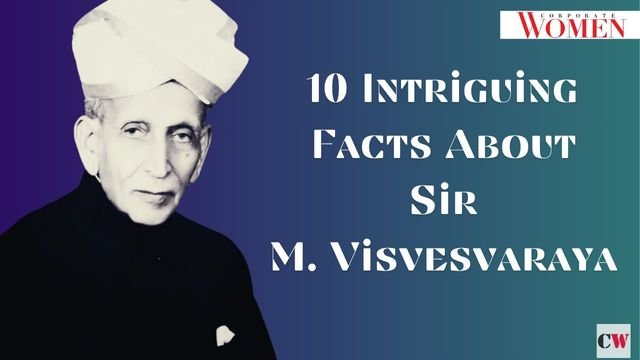
Sir Mokshagundam Visvesvaraya, a celebrated civil engineer and statesman, is renowned for his transformative contributions to India’s infrastructure and development. His achievements are commemorated each year on Engineer’s Day, September 15th. While his prominent accomplishments are well-known, there are many lesser-known aspects of his life that illuminate his exceptional impact. Here are ten compelling facts that offer a deeper look into Sir M. Visvesvaraya’s remarkable legacy:
In 1903, Sir M. Visvesvaraya introduced a revolutionary technology with his automatic weir water floodgates. Installed initially at the Khadakvasla Dam, these floodgates were engineered to regulate water flow and maximise reservoir capacity efficiently. His design prevented overflow and protected the dam from potential damage, and it was subsequently adopted in other key projects, such as the Tigra Dam and the Krishna Raja Sagar Dam, improving flood management and irrigation practices throughout the region.
Visvesvaraya’s engineering career spanned far beyond Mysore. His work took him to major cities, including Bombay (now Mumbai), Hyderabad, and Aden (now Yemen). Each location benefited from his expertise in developing water supply systems and drainage solutions, demonstrating his ability to apply his skills across various environments and leave a lasting impact on public infrastructure.
In 1908, Sir Visvesvaraya undertook an international study tour to examine the industrial and engineering practices of developed countries. This global exposure provided him with valuable insights that he later applied to his projects in India. His integration of international best practices into Indian development projects highlighted his commitment to modernising the country’s infrastructure with cutting-edge techniques.
Even after reaching the age of 90, Sir Visvesvaraya continued to lend his expertise to major infrastructure projects. One of his notable late-career contributions was his advisory role in the design and construction of the Mokama Bridge over the Ganges in Bihar. His ongoing involvement in significant projects well into his senior years underscores his lifelong dedication and commitment to advancing India’s infrastructure.
Sir M. Visvesvaraya’s engineering prowess extended to flood management. He developed a comprehensive flood protection system for Hyderabad to address the challenges posed by the Musi River floods. His system played a crucial role in safeguarding the city from severe flooding, showcasing his ability to design complex solutions for pressing urban and environmental issues.
Beyond his engineering achievements, Visvesvaraya was a fervent supporter of the Kannada language. He played a significant role in founding the Kannada Parishat, an organisation dedicated to the promotion and preservation of Kannada literature and language. His active participation in Kannada-language seminars and discussions reflected his deep cultural pride and commitment to linguistic and literary advancement.
Sir Visvesvaraya’s impact on engineering education was profound. He was instrumental in establishing the Government Engineering College in Bangalore in 1917, now known as the University Visvesvaraya College of Engineering. This institution has become one of India’s leading engineering colleges, a testament to Sir MV’s vision for fostering technical education and nurturing future generations of engineers.
During his tenure as Dewan of Mysore, Sir Visvesvaraya led numerous initiatives to drive industrial growth in the region. He was key in establishing institutions such as the Mysore Iron & Steel Works, the State Bank of Mysore, and the Bangalore Polytechnic. These ventures not only advanced Mysore’s industrial sector but also laid the groundwork for broader economic development.
Visvesvaraya’s contributions extended into philanthropy and social development. He was a driving force behind the creation of the Bangalore Agricultural University and the Mysore Chamber of Commerce. His efforts reflected a holistic approach to societal progress, encompassing education, agriculture, and commerce and showcasing his broader vision for national development.
Sir M. Visvesvaraya’s legacy endures through numerous institutions and landmarks named in his honour. The Visvesvaraya Technological University in Belagavi and the Sir M. Visvesvaraya Institute of Technology in Bangalore are prominent examples. Additionally, metro stations in Bangalore and Delhi bearing his name serve as daily reminders of his significant contributions to India’s progress.
The legacy of Sir M. Visvesvaraya extends beyond his notable engineering feats, impacting education, industry, and cultural preservation. These ten lesser-known facts reveal the depth of his influence and the enduring significance of his visionary work in shaping modern India.












Thanks for sharing superb informations. Your site is very cool. I am impressed by the details that you have on this web site. It reveals how nicely you perceive this subject. Bookmarked this web page, will come back for more articles. You, my pal, ROCK! I found just the information I already searched everywhere and simply couldn’t come across. What a great web-site.
Today, I went to the beachfront with my kids. I found a sea shell and gave it to my 4 year old daughter and said “You can hear the ocean if you put this to your ear.” She placed the shell to her ear and screamed. There was a hermit crab inside and it pinched her ear. She never wants to go back! LoL I know this is totally off topic but I had to tell someone!
Someone essentially help to make seriously articles I would state. This is the very first time I frequented your web page and thus far? I surprised with the research you made to create this particular publish incredible. Magnificent job!
Hey, I think your website might be having browser compatibility issues. When I look at your blog in Safari, it looks fine but when opening in Internet Explorer, it has some overlapping. I just wanted to give you a quick heads up! Other then that, amazing blog!
I discovered your blog site on google and check a few of your early posts. Continue to keep up the very good operate. I just additional up your RSS feed to my MSN News Reader. Seeking forward to reading more from you later on!…
When I originally commented I clicked the -Notify me when new comments are added- checkbox and now each time a comment is added I get four emails with the same comment. Is there any way you can remove me from that service? Thanks!
wonderful submit, very informative. I wonder why the opposite experts of this sector do not notice this. You must continue your writing. I’m sure, you’ve a huge readers’ base already!
Would love to incessantly get updated outstanding site! .
fantastic post, very informative. I wonder why the other experts of this sector do not notice this. You should continue your writing. I’m sure, you’ve a great readers’ base already!
I am not real fantastic with English but I come up this very easygoing to understand.
Really great visual appeal on this website , I’d rate it 10 10.
I genuinely enjoy looking at on this internet site, it has got great articles. “Don’t put too fine a point to your wit for fear it should get blunted.” by Miguel de Cervantes.
Hi , I do believe this is an excellent blog. I stumbled upon it on Yahoo , i will come back once again. Money and freedom is the best way to change, may you be rich and help other people.
Loving the information on this website , you have done great job on the blog posts.
I have to express my love for your kindness in support of visitors who absolutely need assistance with your idea. Your personal dedication to passing the message all around had been rather valuable and have in every case helped guys like me to get to their targets. Your personal important help and advice entails this much a person like me and substantially more to my office colleagues. Best wishes; from all of us.
I like this site very much, Its a very nice situation to read and receive information. “Philosophy is a battle against the bewitchment of our intelligence by means of language.” by Ludwig Wittgenstein.
Hello, you used to write magnificent, but the last few posts have been kinda boring… I miss your tremendous writings. Past several posts are just a bit out of track! come on!
What’s Happening i am new to this, I stumbled upon this I’ve found It absolutely useful and it has aided me out loads. I hope to contribute & aid other users like its aided me. Good job.
After study a few of the blog posts on your website now, and I truly like your way of blogging. I bookmarked it to my bookmark website list and will be checking back soon. Pls check out my web site as well and let me know what you think.
I’ve read some excellent stuff here. Certainly price bookmarking for revisiting. I wonder how so much attempt you place to create such a fantastic informative website.
Respect to author, some good entropy.
I like this web site because so much utile stuff on here :D.
Wow! This could be one particular of the most helpful blogs We have ever arrive across on this subject. Basically Fantastic. I am also a specialist in this topic so I can understand your hard work.
I am not rattling superb with English but I come up this real easy to understand.
Hello! Do you use Twitter? I’d like to follow you if that would be okay. I’m absolutely enjoying your blog and look forward to new updates.
I am glad to be a visitant of this stark site! , thanks for this rare information! .
Hi, Neat post. There’s a problem with your site in internet explorer, would check this… IE still is the market leader and a good portion of people will miss your fantastic writing due to this problem.
Great blog! Is your theme custom made or did you download it from somewhere? A theme like yours with a few simple tweeks would really make my blog jump out. Please let me know where you got your design. With thanks
Thanks for every one of your effort on this website. Debby enjoys conducting investigations and it’s simple to grasp why. A lot of people notice all of the compelling medium you make very useful solutions through your web site and therefore foster contribution from visitors on this issue then our favorite simple princess is without a doubt discovering a lot of things. Take advantage of the rest of the new year. You’re the one performing a useful job.
Excellent read, I just passed this onto a colleague who was doing a little research on that. And he actually bought me lunch because I found it for him smile Thus let me rephrase that: Thank you for lunch! “Remember It is 10 times harder to command the ear than to catch the eye.” by Duncan Maxwell Anderson.
I adore reading through and I conceive this website got some truly utilitarian stuff on it! .
I wanted to create you one little bit of note to be able to thank you so much once again for those incredible suggestions you’ve documented at this time. It was quite tremendously generous with people like you giving without restraint precisely what many individuals could possibly have offered as an e book to help make some cash on their own, most importantly considering that you could have done it in the event you desired. The thoughts also worked to be the fantastic way to comprehend many people have similar fervor like my very own to know a whole lot more related to this issue. I believe there are millions of more pleasurable opportunities ahead for those who go through your blog.
Excellent post. I was checking continuously this blog and I’m impressed! Extremely useful info particularly the ultimate phase 🙂 I maintain such info a lot. I was looking for this certain info for a long time. Thank you and good luck.
Your style is so unique compared to many other people. Thank you for publishing when you have the opportunity,Guess I will just make this bookmarked.
Nice weblog right here! Additionally your website so much up very fast! What web host are you the usage of? Can I get your associate hyperlink to your host? I desire my website loaded up as fast as yours lol
There is noticeably a bundle to know about this. I assume you made certain nice points in features also.
Hey There. I found your blog the usage of msn. That is a really well written article. I’ll make sure to bookmark it and return to learn more of your useful information. Thanks for the post. I will definitely comeback.
Valuable info. Lucky me I found your website by accident, and I am shocked why this accident didn’t happened earlier! I bookmarked it.
Very good site you have here but I was curious if you knew of any community forums that cover the same topics discussed in this article? I’d really like to be a part of group where I can get feedback from other knowledgeable people that share the same interest. If you have any recommendations, please let me know. Cheers!
I’ll right away snatch your rss feed as I can not in finding your e-mail subscription hyperlink or e-newsletter service. Do you have any? Kindly permit me understand so that I may just subscribe. Thanks.
Someone necessarily assist to make severely posts I might state. That is the first time I frequented your website page and to this point? I surprised with the research you made to create this particular put up incredible. Wonderful task!
Everything is very open and very clear explanation of issues. was truly information. Your website is very useful. Thanks for sharing.
Hello just wanted to give you a quick heads up. The text in your content seem to be running off the screen in Chrome. I’m not sure if this is a format issue or something to do with browser compatibility but I thought I’d post to let you know. The style and design look great though! Hope you get the issue fixed soon. Many thanks
I savor, cause I discovered exactly what I used to be taking a look for. You’ve ended my 4 day lengthy hunt! God Bless you man. Have a nice day. Bye
Somebody necessarily help to make seriously posts I would state. That is the very first time I frequented your website page and up to now? I surprised with the research you made to make this actual post incredible. Excellent activity!
Pretty nice post. I just stumbled upon your weblog and wished to say that I have really enjoyed browsing your blog posts. In any case I’ll be subscribing to your rss feed and I hope you write again very soon!
I am no longer sure the place you’re getting your information, but good topic. I needs to spend some time studying much more or understanding more. Thanks for great info I used to be searching for this info for my mission.
I’ve been absent for some time, but now I remember why I used to love this website. Thank you, I will try and check back more often. How frequently you update your website?
I’m not certain where you’re getting your information, but good topic. I needs to spend some time finding out much more or figuring out more. Thanks for fantastic info I used to be in search of this information for my mission.
Heya i’m for the first time here. I found this board and I find It truly useful & it helped me out much. I hope to give something back and help others like you helped me.
Does your blog have a contact page? I’m having a tough time locating it but, I’d like to send you an email. I’ve got some recommendations for your blog you might be interested in hearing. Either way, great site and I look forward to seeing it improve over time.
Good info. Lucky me I reach on your website by accident, I bookmarked it.
Good day! This is my 1st comment here so I just wanted to give a quick shout out and say I really enjoy reading through your articles. Can you suggest any other blogs/websites/forums that deal with the same topics? Thanks a ton!
I am always looking online for ideas that can benefit me. Thx!
Great blog! Is your theme custom made or did you download it from somewhere? A design like yours with a few simple tweeks would really make my blog stand out. Please let me know where you got your design. Appreciate it
Thanks , I’ve just been looking for information about this subject for ages and yours is the best I’ve discovered till now. But, what about the bottom line? Are you sure about the source?
As I website possessor I believe the content matter here is rattling great , appreciate it for your efforts. You should keep it up forever! Good Luck.
You are my inhalation, I have few blogs and infrequently run out from to brand : (.
Very interesting topic, thank you for putting up.
I like reading and I think this website got some really utilitarian stuff on it! .
wonderful post.Never knew this, thankyou for letting me know.
Nhiều nghiên cứu cũng cho thấy việc uống trà xanh điều độ có thể hỗ trợ chuyển hóa chất béo, tốt cho tim mạch và giúp duy trì sự tỉnh táo trong công việc. Tuy nhiên, nên uống trà với lượng vừa phải, tránh uống lúc bụng đói hoặc quá gần giờ đi ngủ vì hàm lượng caffeine có thể ảnh hưởng đến giấc ngủ ở một số người nhạy cảm.
I’d incessantly want to be update on new posts on this web site, bookmarked! .
Good info. Lucky me I reach on your website by accident, I bookmarked it.
hi!,I love your writing very a lot! share we communicate more approximately your post on AOL? I need an expert on this space to solve my problem. Maybe that is you! Looking ahead to see you.
I always was concerned in this topic and still am, thankyou for putting up.
After study a few of the blog posts on your website now, and I truly like your way of blogging. I bookmarked it to my bookmark website list and will be checking back soon. Pls check out my web site as well and let me know what you think.
I loved as much as you will receive carried out right here. The sketch is attractive, your authored material stylish. nonetheless, you command get bought an shakiness over that you wish be delivering the following. unwell unquestionably come further formerly again since exactly the same nearly very often inside case you shield this hike.
I got what you mean , thankyou for putting up.Woh I am thankful to find this website through google.
I’ve read several good stuff here. Definitely worth bookmarking for revisiting. I surprise how much effort you put to create such a excellent informative site.
Glad to be one of the visitors on this awing website : D.
I just couldn’t depart your website before suggesting that I extremely loved the usual info an individual supply on your visitors? Is gonna be again continuously in order to check out new posts.
Its superb as your other blog posts : D, appreciate it for posting.
certainly like your website but you have to check the spelling on several of your posts. A number of them are rife with spelling issues and I find it very troublesome to tell the truth nevertheless I will certainly come back again.
hey there and thanks on your info – I have certainly picked up something new from proper here. I did however experience several technical points the usage of this site, as I experienced to reload the website many times previous to I may get it to load properly. I were considering in case your web hosting is OK? Now not that I’m complaining, but sluggish loading circumstances times will often affect your placement in google and can injury your quality ranking if ads and ***********|advertising|advertising|advertising and *********** with Adwords. Well I am adding this RSS to my e-mail and can look out for a lot extra of your respective intriguing content. Make sure you update this once more soon..
Enjoyed reading this, very good stuff, appreciate it.
I conceive this website contains some really fantastic information for everyone :D. “America is not merely a nation but a nation of nations.” by Lyndon B. Johnson.
I want looking at and I conceive this website got some genuinely useful stuff on it! .
I have recently started a site, the information you offer on this website has helped me greatly. Thank you for all of your time & work. “A physicist is an atom’s way of knowing about atoms.” by George Wald.
Someone necessarily assist to make significantly articles I would state. This is the very first time I frequented your website page and thus far? I surprised with the research you made to make this actual post incredible. Great task!
Great write-up, I’m regular visitor of one’s web site, maintain up the excellent operate, and It’s going to be a regular visitor for a long time.
I’ve learn several good stuff here. Definitely value bookmarking for revisiting. I wonder how much effort you place to make this kind of great informative web site.
I’ve been exploring for a little bit for any high-quality articles or weblog posts on this kind of space . Exploring in Yahoo I eventually stumbled upon this web site. Studying this info So i’m satisfied to exhibit that I’ve an incredibly just right uncanny feeling I found out just what I needed. I so much indisputably will make certain to don’t fail to remember this website and give it a glance on a constant basis.
Thanks a bunch for sharing this with all people you actually understand what you’re talking about! Bookmarked. Kindly additionally visit my site =). We could have a link exchange agreement between us!
I’ve learn several excellent stuff here. Definitely worth bookmarking for revisiting. I surprise how a lot effort you set to make such a magnificent informative web site.
I’m amazed, I have to admit. Seldom do I come across a
blog that’s equally educative and amusing, and let me tell you, you’ve hit the nail on the head.
The issue is an issue that too few folks are speaking intelligently about.
I am very happy that I came across this during my search for something regarding
this.
Feel free to visit my web site :: daftar dewapoker
Pretty section of content. I just stumbled upon your blog and in accession capital to assert that I acquire in fact enjoyed account your blog posts. Anyway I will be subscribing to your feeds and even I achievement you access consistently quickly.
I like this web site very much so much fantastic information.
Thanks a bunch for sharing this with all people you actually realize what you are speaking approximately!
Bookmarked. Kindly additionally visit my website =).
We could have a hyperlink change contract between us
I love it when people come together and share opinions, great blog, keep it up.
You can certainly see your enthusiasm in the work you write. The world hopes for even more passionate writers like you who are not afraid to say how they believe. At all times follow your heart. “Faith in the ability of a leader is of slight service unless it be united with faith in his justice.” by George Goethals.
Thanks for sharing excellent informations. Your web-site is so cool. I am impressed by the details that you’ve on this web site. It reveals how nicely you understand this subject. Bookmarked this website page, will come back for more articles. You, my pal, ROCK! I found just the information I already searched everywhere and simply couldn’t come across. What a great web site.
Aw, this was a really nice post. In concept I want to put in writing like this moreover – taking time and precise effort to make a very good article… however what can I say… I procrastinate alot and under no circumstances seem to get something done.
Great write-up, I’m regular visitor of one’s website, maintain up the nice operate, and It is going to be a regular visitor for a long time.
Thank you a bunch for sharing this with all of us you really understand what you are talking approximately! Bookmarked. Please additionally discuss with my site =). We could have a link alternate arrangement between us!
Heya i am for the primary time here. I came across this board and I to find It truly useful & it helped me out much. I’m hoping to provide something back and help others such as you helped me.
Real excellent information can be found on web blog. “That is true wisdom, to know how to alter one’s mind when occasion demands it.” by Terence.
Some truly superb info , Sword lily I discovered this. “What’s a man’s age He must hurry more, that’s all Cram in a day, what his youth took a year to hold.” by Robert Browning.
You made some decent factors there. I looked on the web for the issue and located most individuals will go along with along with your website.
I really appreciate you for publishing this wonderful content. I absolutely love your site. Thank you for giving me the opportunity to comment on your blog post. I hope more useful content from you soon.
시알리스의 성분인 타다라필과 효과, 지속시간, 5mg·10mg·20mg 차이를 알아보세요. 복용 방식, 부작용, 함께 복용하면 안 되는 약, 처방과 가격 확인 방법을 정리했습니다.
Many thanks for sharing such interesting article. I love your web page. Thanks again for allowing me to comment on your website. I look forward to more interesting posts from you soon.
I’d have to examine with you here. Which is not one thing I usually do! I take pleasure in reading a post that may make folks think. Additionally, thanks for permitting me to comment!
제주출장마사지 셀럽의 코스와 가격, 방문 예약 방법을 확인하세요. 제주시·서귀포시·애월·중문 등 지역별 상담과 숙소 출입, 예상 도착 시간, 제주출장안마 현장 결제 기준을 안내합니다.
Hello.This article was extremely motivating, especially because I was browsing for thoughts on this matter last Friday.
I really appreciate you for posting such valuable content. I love your blog. Many thanks for allowing me to comment on your web page. I look forward to additional interesting updates from you soon.
Appreciating the dedication you put into your site and in depth information you present. It’s great to come across a blog every once in a while that isn’t the same old rehashed information. Excellent read! I’ve bookmarked your site and I’m including your RSS feeds to my Google account.
Fantastic blog! Do you have any helpful hints for aspiring writers? I’m planning to start my own site soon but I’m a little lost on everything. Would you recommend starting with a free platform like WordPress or go for a paid option? There are so many options out there that I’m completely confused .. Any tips? Thanks a lot!
Please let me know if you’re looking for a article writer for your site. You have some really great posts and I think I would be a good asset. If you ever want to take some of the load off, I’d really like to write some articles for your blog in exchange for a link back to mine. Please send me an email if interested. Thank you!
I like this post, enjoyed this one thanks for putting up.
It’s the best time to make some plans for the future and it is time to be happy. I’ve read this post and if I could I want to suggest you few interesting things or advice. Maybe you could write next articles referring to this article. I desire to read more things about it!
Thanks for your personal marvelous posting! I definitely enjoyed reading it, you happen to be a great author.I will remember to bookmark your blog and may come back very soon. I want to encourage that you continue your great work, have a nice afternoon!
Thank you for every other magnificent article. The place else may anyone get that type of information in such a perfect means of writing? I have a presentation subsequent week, and I am on the look for such info.
Thanks for another wonderful post. The place else may just anybody get that kind of info in such an ideal manner of writing? I have a presentation next week, and I am on the search for such info.
Very interesting subject , thankyou for putting up.
Hi there, I discovered your blog by the use of Google even as searching for a comparable topic, your site came up, it seems good. I’ve bookmarked it in my google bookmarks.
Thank you for sharing this great content. I truly enjoy your blog. Thanks again for letting me share my thoughts on your article. I look forward to more interesting posts from you in the coming days.
You have noted very interesting details ! ps decent web site.
Thank you for sharing this valuable post. I absolutely love your site. Thank you for providing a space for me to comment on your web page. I hope more informative publications from you in the future.
I really appreciate you for publishing this valuable article. I absolutely love your website. Thanks again for allowing me to comment on your web page. I look forward to more interesting posts from you in the near future.
Today, I went to the beach front with my children. I found a sea shell and gave it to my 4 year old daughter and said “You can hear the ocean if you put this to your ear.” She put the shell to her ear and screamed. There was a hermit crab inside and it pinched her ear. She never wants to go back! LoL I know this is completely off topic but I had to tell someone!
I don’t even know how I ended up here, but I thought this post was great. I do not know who you are but certainly you’re going to a famous blogger if you aren’t already 😉 Cheers!
I always was concerned in this subject and still am, thanks for putting up.
Hi! Would you mind if I share your blog with my twitter group? There’s a lot of folks that I think would really appreciate your content. Please let me know. Cheers