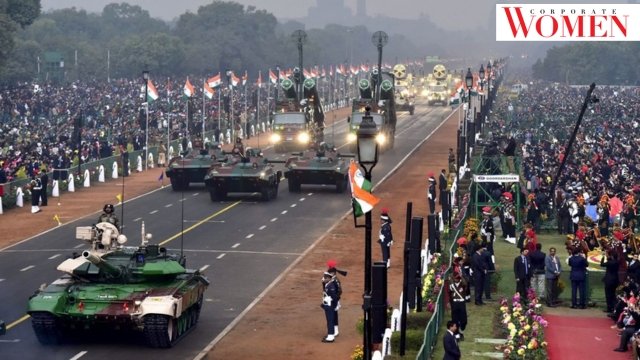
On January 26, 2026, India’s most iconic boulevard—Kartavya Path—won’t just host a parade. It will host a feeling.
A feeling stitched together by 150 years of Vande Mataram, powered by India’s military confidence, and lit up by the country’s cultural brilliance. This year’s Republic Day Parade (RDP) 2026 is being planned as a national spectacle where history walks beside modern strength—and where the spotlight shines not only on soldiers and tableaux, but also on the citizens who are shaping India every day.
Unveiled at a press conference in New Delhi on January 16, 2026, the broad contours shared by Defence Secretary Shri Rajesh Kumar Singh point to one thing clearly: Republic Day 2026 is designed to be immersive, emotional, and unforgettable.
A Global Moment on India’s Grandest Day
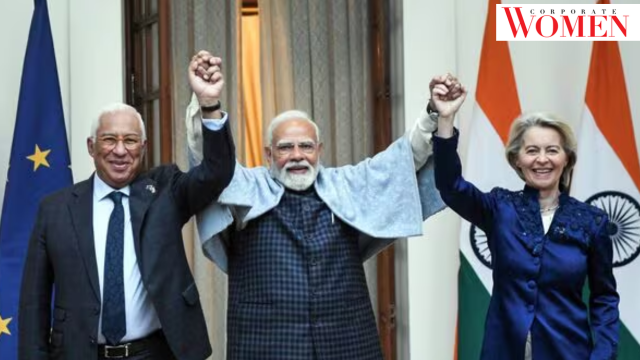
In a significant diplomatic highlight, India will welcome two top European leaders as Chief Guests at the Republic Day Parade 2026:
- Mr Antonio Costa, President of the European Council
- Ms Ursula von der Leyen, President of the European Commission
Their presence at Kartavya Path signals more than ceremony—it reflects India’s growing role on the global stage and the strength of India–EU ties at a time when the world is watching partnerships reshape the future.
The Theme That Hits the Heart: 150 Years of Vande Mataram
Some songs are sung. Some songs become history.
In 2026, the Republic Day Parade will revolve around a theme that carries deep emotion and national memory: 150 years of the national song Vande Mataram.
Born in the freedom movement, Vande Mataram has lived through generations—spoken in protests, sung in classrooms, echoed in stadiums, and whispered in moments of pride. Now, as it completes 150 years, India is turning the parade into a tribute to the song that once gave a voice to the nation.
A Rare Visual Storyline from 1923
Adding a museum-like richness to Kartavya Path, a series of paintings created by Shri Tejendra Kumar Mitra in 1923 will be displayed as view-cutters along the route. These artworks illustrate the verses of Vande Mataram and were published in the historic ‘Bande Mataram Album’ (1923)—making the parade not just a march, but a moving exhibition of national heritage.
A Finale Made for Goosebumps
At the conclusion of the parade, a banner depicting ‘वंदेमातरम्’ will be unveiled, followed by the release of rubber balloons—a simple but powerful closing image of unity, pride, and celebration.
The Theme Will Be Everywhere
From the décor to the audience experience, Vande Mataram will be woven into every detail:
- Floral arrangements at the dais inspired by the theme
- Invitation cards and tickets designed on the theme
- Videos on Vande Mataram played on screens along Kartavya Path
- Tableaux under the broader themes:
- “स्वतंत्रता का मंत्र – वंदे मातरम”
- “समृद्धि का मंत्र – आत्मनिर्भर भारत”
Not Just Delhi: Vande Mataram Will Travel Across India
The celebration won’t be confined to the capital. Between January 19 and 26, 2026, Vande Mataram will be heard across the country through Pan-India band performances organised by:
- Indian Army
- Indian Navy
- Indian Air Force
- Indian Coast Guard
- Other CAPFs
One of the most symbolic venues will be the birthplace and ancestral home of Rishi Bankim Chandra Chattopadhyay at Kanthalpara, Naihati (North 24 Parganas, West Bengal)—now known as Bankim Bhawan Gaveshana Kendra. It’s a full-circle moment: the song returning to the place where its spirit began.
A People’s Wave: 1.61 Lakh Citizens Join the Republic Day Spirit
The energy around the theme has already spilled into public participation. Competitions and quizzes held on MyGov and My Bharat portals on Vande Mataram and Aatmanirbhar Bharat saw 1,61,224 entries.
To celebrate this participation:
- Top 30 winners will receive cash prizes
- Top 200 winners have been invited to witness Republic Day Celebrations 2026
The Army’s Biggest New Moment: First-Ever Battle Array Formation
If the theme is the emotion of RDP 2026, the military display is its thunder.
This year, the Indian Army will introduce something never seen before at the Republic Day Parade: a Battle Array Formation—being showcased for the first time.
It will be a statement of modern readiness, integration, and battlefield capability—demonstrating how India’s defence forces are evolving with new technologies, mobility, and strategy.
What to Watch For
The Army will be represented by:
- A Mounted Column of 61 Cavalry
- A Battle Array Formation (first time)
- Seven marching contingents
- A mechanised column packed with cutting-edge equipment
The mechanised display will feature:
- HMRV (High Mobility Recce Veh – BFSR & ATGM)
- Dhruv helicopter
- T-90 and Arjun Main Battle Tanks
- BMP-II and NAMIS-II Nag Missile System
- IOC (Integrated Operational Centre)
- UGVs (Unmanned Ground Vehicles)
- ATV (All Terrain Vehicle)
- LSV (Light Strike Vehicle) with trailer (Robotic Mules & UGV)
- Shaktiban
- ATAGS and Dhanush
- URLS and BrahMos
- Akash & MRSAM
- Drone Shakti
- Glacier ATV
Marching Contingents with a Distinct Identity
Seven marching contingents will march post the saluting dais, including an animal contingent featuring:
- Zanskar ponies
- Bactrian camels
- Dogs with handlers
Alongside will be contingents like SCOUTS, RAJPUT, ASSAM, JAK LI, ARTY, BHAIRAV (in ‘Uncha Kadam Taal’) and Ladakh Scouts—bringing tradition, pride and discipline together in one synchronized movement.
18 Marching Contingents, 13 Bands, and a Sky That Roars
RDP 2026 will feature:
- 18 marching contingents
- 13 bands
And then comes the moment every spectator waits for—the flypast, the grand finale that turns the sky into a stage.
Aircraft to be showcased include:
Rafale, Su-30, P8i, C-295, MiG-29, Apache, LCH, ALH, Mi-17, in different formations—an aerial signature of India’s air power and precision.
A Special Salute to Veterans
Another powerful highlight will be the Indian Air Force veterans’ tableau, offering a glimpse of veterans’ contributions to the nation. It’s a tribute that goes beyond uniform and medals—honouring the idea that service continues long after the battlefield.
10,000 Special Guests: India’s Real Achievers Take the Best Seats
In one of the most meaningful shifts in recent years, the parade will be witnessed by around 10,000 Special Guests from across India—people chosen for exemplary work and contribution to national development.
These include achievers from areas like:
- innovation and start-ups
- employment and income generation
- Self Help Groups
- natural farming
- space missions like Gaganyaan and Chandrayaan
- DRDO projects
- Deep Ocean Mission
- artisans and craftspeople
- sports winners
- volunteers and youth programme participants
They will be seated prominently at Kartavya Path—turning the Republic Day Parade into a true symbol of Janbhagidari.
30 Tableaux: India’s Diversity Rolls Out, One Story at a Time
A total of 30 tableaux will roll down Kartavya Path in 2026:
- 17 from States/UTs
- 13 from Ministries/Departments/Services
From craft villages and folk dances to digital progress and innovation, the tableaux will present India as it truly is—deeply rooted and fiercely future-ready.
2,500 Artists: Kartavya Path Becomes a Cultural Universe
As the parade moves from military precision to cultural celebration, around 2,500 artists will perform as part of the cultural programme.
The theme:
- “स्वतंत्रता का मंत्र – वंदे मातरम”
- “समृद्धि का मंत्र – आत्मनिर्भर भारत”
The creative team includes:
- M.M. Keeravani (Music Director)
- Subhash Sehgal (Lyricist)
- Anupam Kher (Narrator)
- Santosh Nair (Choreographer)
- Under the overall direction of Dr Sandhya Purecha
- Costume design by Sandhya Raman
This segment promises to be one of the most visually rich and emotionally charged moments of the entire celebration.
Republic Day 2026: Where a Song Becomes a Statement
Republic Day Parade 2026 is shaping up to be a rare blend of the past and the possible.
It honours a national song that shaped India’s freedom story.
It showcases a military that is modern, mobile, and mission-ready.
It celebrates a culture that is alive, diverse, and unstoppable.
And it brings citizens to the front row—literally and symbolically.
When Vande Mataram turns 150 at Kartavya Path, it won’t just be remembered.
It will be felt.
Because some words don’t fade with time—they grow stronger with it.