As the technology sector continues to innovate and evolve, the increasing number of women ascending to CEO positions marks a critical shift in corporate leadership dynamics. This trend not only reflects progress in gender representation but also underscores the strategic importance of diverse leadership in driving business growth, resilience, and cultural transformation.
Women leaders in the tech industry bring unique perspectives that enhance decision-making and innovation, qualities vital to navigating the complexities of a fast-paced digital economy. Yet, despite gains, women remain underrepresented in C-suite roles, particularly the CEO seat, where executive influence directly shapes organizational strategy, culture, and market positioning.
The Implications for Women in Corporate Leadership
The rise of women CEOs in tech is more than symbolic; it holds tangible implications for leadership pipelines across sectors. It signals to emerging women leaders that executive roles are attainable and highlights the necessity for targeted mentorship, sponsorship, and development programs supporting women’s long-term career mobility.
Strategic Impact: Female CEOs influence corporate governance with a focus on inclusivity and sustainability, responding to stakeholder demands for accountable leadership.
Cultural Transformation: Their leadership style often fosters inclusive cultures that enhance employee engagement, retention, and innovation capacity.
Talent Strategy: Their presence propels organizations to reevaluate talent pipelines, promoting equitable opportunity and addressing barriers that have traditionally hindered women’s advancement.
Broader Business and Industry Significance
The shift aligns with broader industry trends emphasizing measurable outcomes in diversity, equity, and inclusion (DEI). Tech companies with women at the helm demonstrate improved market competitiveness and investor confidence, underscoring the link between leadership diversity and long-term business performance.
For stakeholders—from boardrooms to HR leadership, investors to policymakers—recognizing and accelerating this momentum is essential. It offers a roadmap for embedding gender diversity at the highest levels, not only as a matter of equity but as a strategic business advantage driving innovation and resilience.
Looking Ahead: Practical Steps for Sustained Progress
To sustain and expand the influence of women CEOs in tech and beyond, organizations must prioritize leadership development programs tailored to women, strengthen sponsorship and mentorship networks, and instill governance policies that hold leadership accountable for diversity outcomes.
Ultimately, the rise of women CEOs in technology is a bellwether for evolving corporate leadership paradigms, presenting an opportunity for all sectors to rethink how talent is nurtured and elevated. For women professionals aspiring to executive growth, and for the organizations seeking resilient, forward-looking leadership, this shift heralds a new chapter in inclusive and strategic corporate governance.
In the rapidly evolving corporate landscape, technology continues to play a critical role in transforming leadership practices, workplace inclusion, and operational efficiency. Microsoft’s recent announcement of AI-generated meeting transcripts in Microsoft 365 marks a strategic advancement that directly influences how executives, managers, and teams collaborate and communicate.
This feature leverages cutting-edge artificial intelligence to capture detailed meeting transcripts automatically, enabling comprehensive documentation and accessibility. For women leaders and professionals navigating demanding corporate roles, this tool can be instrumental in ensuring clear communication, thorough follow-up, and inclusive participation, particularly in hybrid or remote work environments where voices can easily be overlooked.
Strategic Implications for Women in Leadership and Corporate Culture
Women in executive and managerial positions often face the dual challenge of making their voices heard while managing extensive responsibilities. Microsoft’s AI transcript capabilities can support the reduction of communication gaps, allowing more equitable information sharing and boosting transparency in decision-making processes.
For CHROs, HR leaders, and DEI professionals, these transcripts provide a valuable resource for auditing meeting inclusivity and participation patterns, paving the way for data-informed strategies to foster equitable workplace cultures. Moreover, ensuring detailed and accessible records can enhance governance and compliance efforts, critical components of corporate policy and boardroom accountability.
Driving Talent Retention and Executive Growth
Meeting transcripts serve more than just communication needs; they support talent development by making knowledge accessible and fostering continuous learning. Women on leadership tracks benefit from revisiting detailed discussions, capturing nuances missed in real-time, and leveraging this clarity to nurture their executive capabilities and strategic influence.
Additionally, for corporate mentors and sponsors, the transcripts provide a precise basis for feedback and coaching, enabling targeted professional growth. This aligns with prevailing notions that technology-enabled leadership development tools are vital for retaining and advancing women in the workplace.
Looking Ahead: AI as a Catalyst for Inclusive and Effective Corporate Leadership
As the global corporate ecosystem places stronger scrutiny on measurable DEI outcomes and leadership representation, integrating AI-powered solutions like Microsoft’s meeting transcripts into daily workflows showcases how technology can underpin meaningful inclusion and leadership advancement.
Decision-makers should consider adopting these tools not merely for operational efficiency but as strategic assets that reinforce transparent governance, enrich corporate culture, and support the sustained growth of women leaders. This intersection of technology and leadership paves the way for stronger, more resilient organizations capable of responding dynamically to the evolving demands of modern workplaces.
In conclusion, Microsoft’s AI-generated meeting transcription feature is more than a productivity enhancement—it represents a tangible step forward in the ongoing journey toward inclusive, accountable, and effective corporate leadership. Executive sponsors, HR leaders, and women professionals poised for growth are advised to explore this innovation as part of a broader talent and leadership strategy.
Nigeria’s investment in expanding data center capacity in Bengaluru represents a pivotal moment in the intersection of technology infrastructure growth and leadership diversity. While the headline captures a critical technological and business development, its deeper implications for women in corporate leadership deserve close examination.
The expansion of data center infrastructure in a strategic tech hub like Bengaluru signals not only increased demand for robust digital services but also opens avenues for women executives and professionals to leverage emerging leadership roles in a traditionally male-dominated sector. For women leaders in corporate India and the broader global technology ecosystem, this trend presents new business opportunities alongside challenges in representation and workplace inclusion.
Strategic Industry Implications for Women Leaders
Data centers are foundational to the digital economy and critical for sectors such as finance, healthcare, media, and consulting where women are increasingly steering innovation and leadership. Nigeria’s initiative highlights how global investments in technology can catalyze corporate growth, but also intensify the need for inclusive talent strategies that prioritize women’s retention, advancement, and meaningful participation in high-impact roles.
Moreover, this development underscores the importance of mentorship and sponsorship frameworks tailored to support women in technology and infrastructure leadership pipelines. It calls for corporate governance mechanisms that ensure equity in leadership appointments and promote inclusive culture, reinforcing women’s ability to impact business transformation directly.
Connecting Infrastructure Growth to Women’s Executive Advancement
As the data center footprint expands in Bengaluru, the corporate sector must translate technological investments into leadership diversity dividends. This is critical at a time when women remain underrepresented in C-suite roles in tech and infrastructure domains worldwide. Addressing pipeline bottlenecks, enhancing career mobility, and embedding DEI policies focused on measurable outcomes will ensure that women leaders are front and center in shaping the next phase of corporate growth.
For CHROs, HR leaders, investors, and board stakeholders, Nigeria’s data center expansion is a signal to intensify focus on strategic talent development and workplace inclusion policies. For women professionals, it marks a moment of opportunity to engage with emerging sectors that define future economic competitiveness.
Looking Ahead: Building Leadership Momentum
Going forward, organizations involved in technology infrastructure investments must embed leadership development programs that address sector-specific barriers faced by women. Policies fostering flexible work environments, targeted mentorship, and sponsorship initiatives will be critical to retaining and advancing women in this growth trajectory.
This investment in data center capacity is more than a technological milestone. It symbolizes the potential to reshape leadership landscapes, nurture inclusive cultures, and demonstrate that diverse leadership teams can drive sustainable business transformation and resilience in the evolving corporate world.
By aligning infrastructure expansion with leadership inclusion strategies, companies can build a stronger, more equitable corporate ecosystem where women professionals thrive and create lasting business impact.
Mentorship and sponsorship have emerged as pivotal drivers of women’s advancement in India’s corporate leadership landscape. As organizations intensify efforts to close gender gaps in executive roles, the strategic deployment of these talent development tools is proving essential to create sustainable pathways for women to ascend to C-suite and boardroom positions.
While India has witnessed a steady increase in women entering the workforce, their representation in senior leadership remains disproportionately low. This gap highlights the need for more intentional career support mechanisms beyond training and skill-building—specifically, the nuanced roles of mentorship and sponsorship in shaping women’s career trajectories.
Understanding the Distinct Roles
Mentorship traditionally involves experienced leaders providing guidance, knowledge-sharing, and advocacy to help mentees navigate corporate challenges. Sponsorship, however, is more action-oriented—it involves powerful advocates actively promoting and creating opportunities for protégés in high-stakes environments such as board selections, strategic projects, and executive promotions.
Strategic Relevance for Corporate Women
For women aspiring to senior roles, access to sponsors is crucial to breaking through barriers that mentorship alone cannot dismantle. Sponsorship accelerates visibility and endorsement of women leaders in critical decision-making circles, directly impacting retention and promotion rates. In the Indian corporate context, where leadership pipelines often narrow sharply for women, sponsorship’s role in unlocking career mobility is gaining heightened attention.
Implications for Organizations and Investors
CEOs, CHROs, and DEI leaders must integrate mentorship and sponsorship into broader talent strategies to meet the growing expectations of investors and stakeholders for measurable diversity outcomes. Companies that embed structured sponsorship programs alongside mentorship initiatives demonstrate stronger leadership diversity, enhanced employee engagement, and better business performance.
Investors are increasingly scrutinizing corporate governance through the lens of gender diversity, linking executive representation to resilience and long-term competitiveness. Transparent sponsorship efforts signal a company’s genuine commitment to building inclusive leadership pipelines, which strengthens employer brand and external credibility.
Future-facing Leadership and Talent Strategies
To embed impactful sponsorship cultures, organizations should focus on training senior leaders to be intentional sponsors, setting clear accountability for advancing women’s careers, and measuring outcome-based metrics. Parallelly, establishing mentorship networks that connect women across hierarchy levels fosters community, peer learning, and reinforcement of professional confidence.
For women professionals, actively seeking mentors and sponsors can be a defining factor in navigating challenges and capitalizing on leadership opportunities. Corporate women’s strategic engagement with these support systems not only advances individual careers but also catalyzes systemic change by reshaping corporate norms around talent advancement.
Ultimately, the integration of mentorship and sponsorship in India’s corporate sector is not merely a pipeline solution but a fundamental lever for transforming leadership culture, enhancing gender inclusion, and driving sustainable business impact. As this paradigm gains momentum, women leaders, HR professionals, and executives must prioritize these mechanisms to unlock the full potential of women’s leadership in the evolving corporate ecosystem.
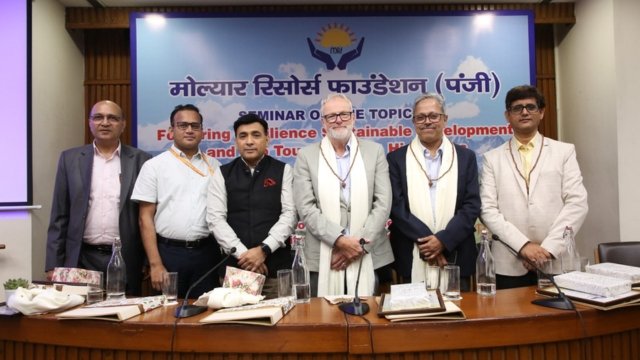
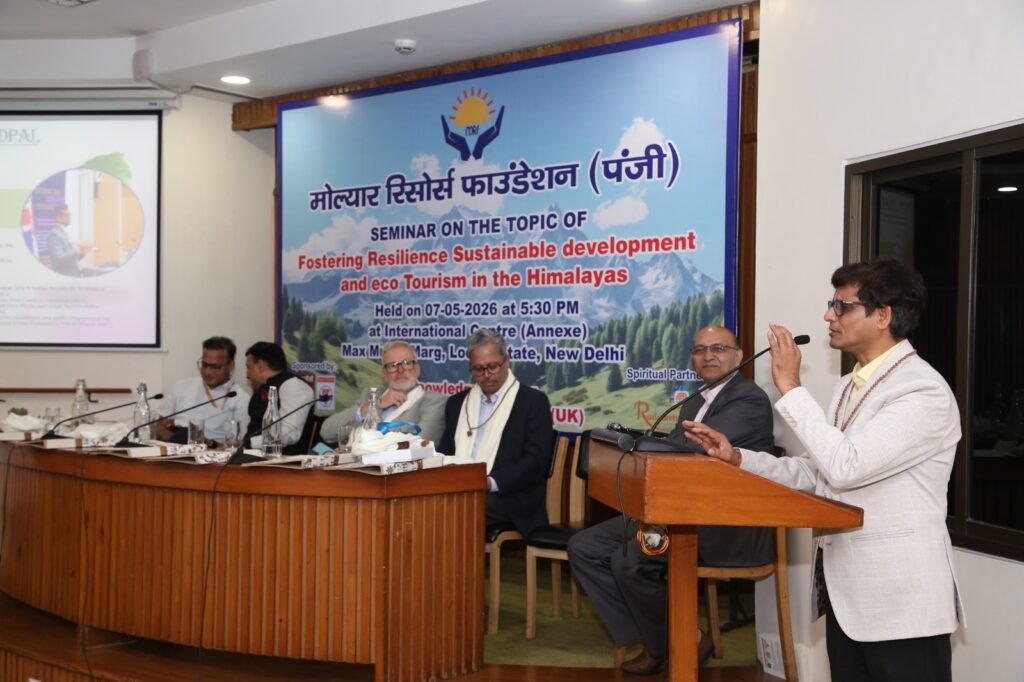
The Molyar Resource Foundation, in collaboration with University of Southampton, organized a high-level seminar on the theme “Fostering Resilience: Sustainable Development and Eco-Tourism in the Himalayas” at India International Centre on 7/5/206. The seminar brought together eminent academicians, policymakers, tourism professionals, environmental experts, entrepreneurs, social leaders, and community representatives to discuss the growing environmental and developmental challenges facing the Himalayan region. The discussions focused on promoting sustainable tourism, ecological protection, community participation, climate resilience, and balanced development in mountain ecosystems.
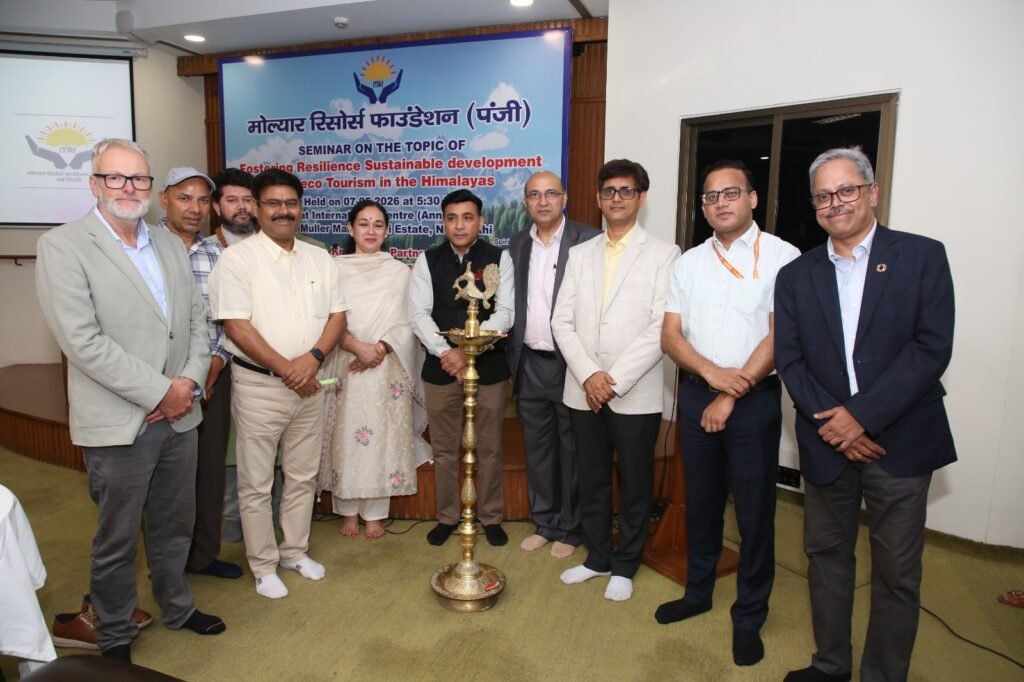
The programme commenced with the traditional Lighting of the Lamp and Saraswati Vandana, symbolizing wisdom, harmony, and collective progress. Mrs. Seema Bhandari and Shri Durga Singh Bhandari, on behalf of the Molyar Resource Foundation, welcomed the distinguished guests with planters, shawls, and mementoes that reflected the spirit of sustainability and Indian hospitality.
Shri Durga Singh Bhandari, Chief Coordinator of the Molyar Resource Foundation and Former General Manager (HR), ONGC, inaugurated the seminar with an address on the “development-disaster paradox” in the Himalayas. He expressed concern that uncontrolled tourism and rapid infrastructure expansion are placing tremendous pressure on fragile mountain ecosystems while providing limited long-term benefits to local communities. He emphasized the urgent need for responsible ecotourism and called upon researchers, industry leaders, policymakers, and local communities to work together to achieve sustainable and environmentally responsible development.
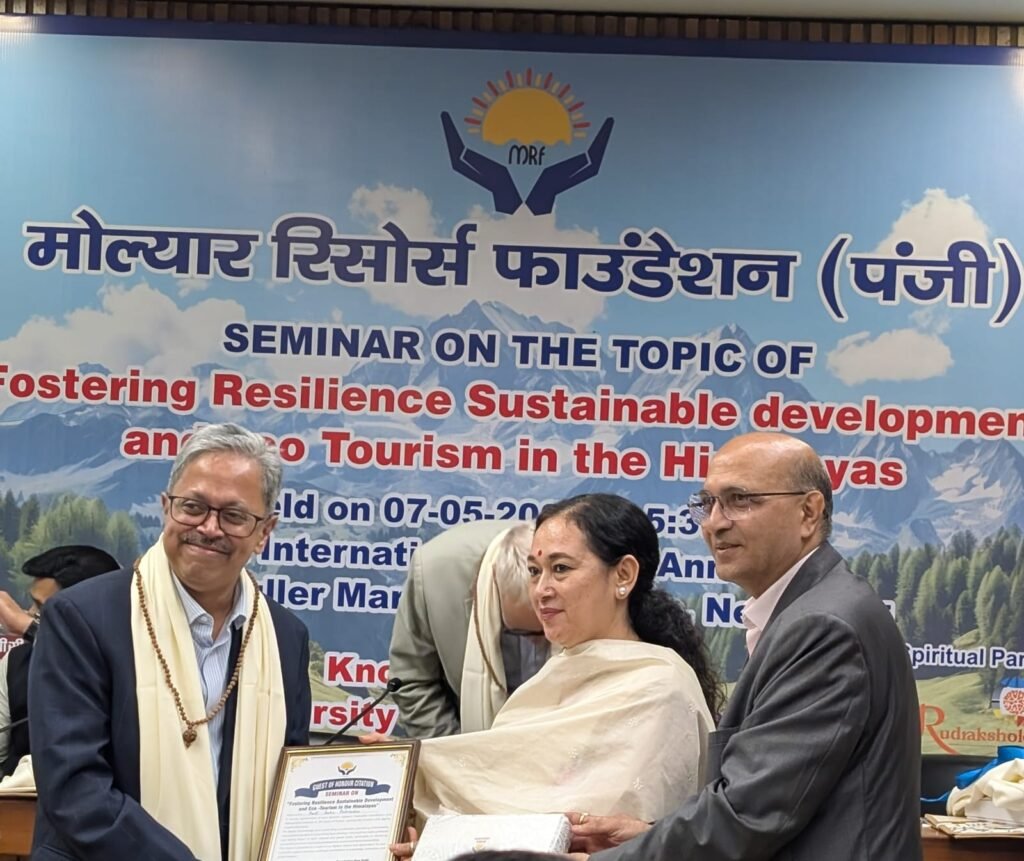
During the seminar, Sabu S. Padmadas formally announced a collaboration between the Molyar Resource Foundation and the University of Southampton, particularly the University India Centre for Inclusive Growth and Sustainable Development and the Sustainability and Resilience Institute, for undertaking innovative and action-oriented initiatives related to sustainability and eco-tourism. He presented a special insignia to Shri Durga Singh Bhandari to mark the beginning of this partnership. Shri Bhandari thanked the University and assured that meaningful and practical initiatives would be implemented in a planned and systematic manner.
B. W. Pandey, Professor in the Department of Geography at University of Delhi and Director of the Centre for Himalayan Studies, delivered an important lecture based on decades of field research in the Himalayan region. He described the Himalayas as the “third pole” of the Earth and a major global water source that supports nearly half of the world’s population. He highlighted the alarming environmental degradation taking place due to unplanned urbanization, unsafe road construction, and uncontrolled tourism. Prof. Pandey explained that many landslides in Uttarakhand occur along vulnerable road corridors and that increasing tourist traffic contributes to black carbon deposition in fragile glacier regions. He strongly advocated the adoption of the “DZUMA” policy framework implemented in Sikkim and promoted the concept of “green tourism” to minimize ecological damage in sensitive mountain areas. He also explained the close relationship between the Himalayas and global climatic systems such as El Niño and the Indian Ocean Dipole.
In his keynote address, Craig Hutton, Director of the Sustainability and Resilience Institute at the University of Southampton, spoke about the changing meaning of sustainability in the modern world. He emphasized that sustainable tourism must protect local culture, strengthen local economies, preserve traditional lifestyles, and safeguard natural heritage. He warned against the “McDonaldisation” of society, where excessive commercialization leads to the loss of cultural identity and traditional practices, especially in mountain communities.
Prof. Sabu S. Padmadas also presented several international initiatives related to sustainable development and global health. He discussed the AYURYOG initiative, which promotes the integration of Ayurveda and Yoga as preventive and holistic healthcare systems at the global level. He emphasized the importance of behavioural change among tourists and service providers and shared examples from Rwanda and Oman, including the use of AI-based tourism management systems. He highlighted the importance of “people-to-people connectivity” and the role of science and technology in shaping effective public policy.
Ravi Gosain, President of the Indian Association of Tour Operators and Managing Director of Erco Travels, presented an industry perspective on Himalayan tourism. He stressed that tourism must be environmentally responsible, economically beneficial, culturally sensitive, and community-oriented. He called for a shift from “mass tourism” to “mindful tourism” and emphasized the promotion of local food, handicrafts, traditional culture, and community homestays to ensure inclusive development. He also urged that conferences and seminars should lead to concrete action plans and policy implementation.
Abdul Qayyum, Director (Technical) and Deputy CEO of the National Medicinal Plants Board under the Ministry of AYUSH, Government of India, spoke about biodiversity conservation and environmental policy. He highlighted the increasing threat to endemic Himalayan species such as the Brahma Kamal and the Black-Necked Crane due to human pressure and environmental degradation. He shared examples of selective and responsible tourism models from the Andaman Islands and discussed the Government’s “e-Forest Fire” monitoring programme for analytical forest fire management.
Major Gorki Chandola (Retd.), social entrepreneur and founder of Pathaal Homestay and Pathaal Agro in Uttarakhand, presented a successful model of community resilience and rural transformation. His initiatives address climate vulnerability, migration, education gaps, and sustainable livelihood generation. He highlighted programmes such as “Run Bhula Run Bhuli,” community sports and cultural events, the Adarsh Model Green School, AI conclaves in the hills, and the Pathaal Homestays initiative that revives abandoned Himalayan homes as sustainable community enterprises.
Renowned singer, composer, lyricist, and director Virender Negi Rahi shared an emotional cultural perspective on the Himalayan crisis through poetry and music. He remarked that “The Himalaya cannot shout, but it speaks through landslides and cloudbursts.” He emphasized that sustainability and ecotourism must become a way of life rather than remaining limited to academic discussions and warned against uncontrolled concrete construction in forested mountain landscapes.
Upendra Dutt Anthwal, Founder Director of Acuity Group of Companies, highlighted the important role of policymakers, entrepreneurs, and stakeholders in shaping sustainable tourism models. Drawing inspiration from the tourism development model of Narara Island in Gujarat, he advocated community-based tourism, local production systems, and cooperative development between Himalayan and non-Himalayan regions.
Prakash Chand Khandpal, Professor at the Centre for the Study of Law and Governance, Jawaharlal Nehru University and ICCR Chair of Indian Studies at the University of Southampton, highlighted Uttarakhand’s historic role in environmental movements such as the Chipko Movement. He warned that excessive tourism has significantly reduced the ecological carrying capacity of mountain regions and increased disaster vulnerability. Stressing that “behavioural change is the need of the hour,” he called upon tourists, local communities, and the tourism industry to adopt more responsible and environmentally conscious practices.
The seminar was organized with the valuable support from ONGC and HPCL.
The event concluded with the felicitation of distinguished guests and a collective commitment to work towards sustainable, resilient, community-centric, and environmentally responsible development models for the Himalayan region and future generations.
Google’s recent announcement of a $300 million investment in artificial intelligence, juxtaposed with simultaneous plans to lay off around 12,000 employees globally, presents significant implications for women in corporate leadership, workplace inclusion, and talent strategy. This development highlights the evolving challenges and opportunities within the tech sector and offers critical insights for women executives, HR leaders, and investors focused on leadership diversity and workforce transformation.
As Google accelerates its focus on AI innovation, the company’s restructuring signals a broader trend in technology firms prioritizing strategic growth areas while managing operational costs. However, such layoffs raise important questions about the impact on women’s representation, retention, and advancement, especially in traditionally male-dominated STEM fields. HR and DEI leaders must navigate these shifts carefully to ensure that workforce reductions do not disproportionately affect women or derail ongoing progress in inclusion and career mobility.
The strategic pivot towards AI underscores the need for women leaders to enhance their expertise and visibility in emerging technology domains. It also elevates the urgency for corporate sponsorship and mentorship initiatives that prepare women for leadership roles amid rapid business transformation. From a governance perspective, boards and executive teams must scrutinize how talent strategies align with long-term business resilience and diversity outcomes.
Moreover, this situation presents a critical moment for corporate policy adjustments, with an emphasis on flexible working arrangements, reskilling programs, and diversity-minded talent retention plans. Investors and governance stakeholders will increasingly assess companies not only on innovation potential but also on their commitment to measurable inclusion metrics and sustainable leadership pipelines.
In summary, Google’s dual strategy of significant AI investment alongside large-scale layoffs is a strategic bellwether for the corporate women’s leadership community. It calls for heightened attention to leadership growth opportunities, responsible workforce transformation, and the integration of DEI principles into high-stakes talent decisions. Navigating these dynamics will be essential for maintaining competitive advantage and fostering a truly inclusive workplace culture in an era of technological disruption.
The enactment of India’s new wage code, which aims to consolidate multiple labor laws into a single, comprehensive framework, signals a significant shift in the country’s labor landscape. While the code promises streamlined compliance and improved wage transparency, its implications for women in the corporate sector warrant close scrutiny from executives, HR leaders, and policymakers focused on gender representation and workplace inclusion.
At its core, the wage code has the potential to influence women’s participation and advancement in the workforce by establishing clearer standards for equal pay and fair compensation practices. As pay parity remains a persistent issue undermining women’s retention and career mobility, the new legislation offers an opportunity for organizations to align remuneration policies with broader gender equity goals.
However, the success of this reform in advancing women’s leadership hinges on the robustness of enforcement mechanisms and corporate governance frameworks that ensure compliance without loopholes. Companies that proactively integrate transparent wage practices under the new code can position themselves as leaders in workplace inclusion, boosting their employer brand and attracting top female talent.
For women executives and corporate leaders, this development also underscores the growing interplay between regulatory policy and talent strategy — encouraging more informed advocacy to shape corporate cultures that prioritize fairness, equity, and measurable outcomes over symbolic gestures.
Strategic Implications for Corporate Leadership and HR
Enhanced Pay Transparency: The wage code’s emphasis on clarity around wages demands more rigorous payroll audits and transparent pay frameworks, which can reduce gender pay gaps and build trust within organizations.
Retention and Advancement: Fairer wage structures directly impact women’s retention by validating their contributions and enabling equitable career progression, essential for strengthening leadership pipelines.
Corporate Governance and Compliance: Boardrooms and C-suites must prioritize adherence to the new wage regulations as part of broader ESG and DEI commitments, linking wage equity to long-term business sustainability.
Talent Strategy Alignment: HR leaders must leverage this policy change to revamp recruitment, appraisal, and promotion processes, embedding pay equity as a cornerstone of talent management.
Looking Ahead: What Corporate Women and Organizations Must Do
Adopting the new wage code as a catalyst for genuine change requires a strategic mindset. Organizations should invest in technology and analytics to monitor wage parity, conduct regular gender audits, and integrate findings into leadership development programs. Women leaders and mentors play a critical role in advocating for equitable pay policies and mentorship frameworks that support career acceleration.
As India’s corporate landscape evolves, this wage reform can help transform workplace culture and leadership demographics, driving progress from policy to measurable representation of women at executive levels.
South India’s rising prominence as a hub for women’s executive leadership is reshaping the broader corporate leadership landscape across India. This trend reflects deepening shifts in regional talent dynamics, workplace inclusion strategies, and sectoral leadership composition that are critical for decision-makers focused on diversity, equity, and sustained business growth.
Recent developments highlight how Karnataka topples the conventional metropolitan hubs to emerge as the leader in women’s corporate presence. Akshaya Muniswamy, chairperson of Bangalore-based The Circle for Planning and Growth, emphasizes the distinctive leadership ecosystem unfolding in South India. Her insights underscore the significance of regional enablers—from local governance and policy frameworks to workplace cultures and sectoral strengths—that collectively drive more robust gender representation in management pipelines.
The emergence of South India as a female leadership incubator holds important implications for CEOs, CHROs, board directors, and investors. Leadership diversification from this region not only expands talent reservoirs but also enhances organizational resilience through fresh perspectives and inclusive governance. Given the ongoing scrutiny on measurable outcomes for inclusion initiatives, the South Indian example signals a strategic blueprint for other regions aiming to boost women’s career mobility and retention in senior roles.
Furthermore, South India’s sectoral leadership in technology, finance, and services underlines how localized talent strategies can spark broader corporate transformation. Women executives rising from these sectors bring essential insights into product innovation, client engagement, and operational agility—capabilities crucial for companies navigating digital disruption and global competition.
For women professionals, this regional growth points to expanding mentorship, sponsorship, and leadership development opportunities. The focus on intersectional pathways—recognizing how gender intersects with geography, culture, and industry specialization—strengthens the case for tailored talent strategies rather than one-size-fits-all inclusion measures.
Looking ahead, organizations must leverage the momentum from South India’s leadership surge by integrating these regional insights into their wider DEI and talent frameworks. This will help unlock systemic change, foster inclusive cultures, and drive sustainable business outcomes at scale.
In conclusion, the ascent of South India in women’s corporate leadership is more than a regional phenomenon—it is a strategic signal for the entire Indian corporate ecosystem. Stakeholders committed to advancing women’s representation and leadership must pay close attention to this evolving landscape. By doing so, they can better position their organizations to benefit from the full spectrum of women’s executive potential and create workplaces defined by equitable growth and innovation.
India’s renewable energy sector is undergoing rapid transformation, positioned as a critical driver of the country’s sustainable development and economic resilience. This surge in the renewable energy industry presents unique opportunities and challenges for women in corporate leadership, particularly in technology-driven and policy-influenced roles within the sector.
The expansion in renewable energy projects—from solar and wind to emerging technologies—has heightened the demand for strong leadership capable of navigating complex regulatory environments and spearheading innovation. For women executives, this is a pivotal moment to stake their claim in a traditionally male-dominated industry and reshape the boardroom composition.
Why This Matters for Women in Corporate Leadership
Women’s representation in India’s renewable energy sector remains limited, mirroring broader trends in STEM and infrastructure industries. However, as companies prioritize sustainability commitments and diversity as core governance pillars, the intersection of environmental ambition and gender inclusion gains strategic importance.
Leaders and investors are increasingly aware that gender-diverse leadership teams deliver better organizational resilience, innovation, and adaptability—traits crucial for a sector defined by rapid change and technological disruption. For women professionals, especially those on executive growth tracks, renewable energy offers a platform to influence policy, operational excellence, and corporate culture towards inclusive sustainability.
Implications for Workplace Inclusion and Talent Strategy
The ongoing transformation demands tailored talent strategies that elevate women’s leadership pipelines—through sponsorship, mentorship, and targeted development programs. Organizations integrating gender inclusion deeply into their corporate frameworks are more likely to retain top female talent, ensuring retention and career mobility amidst competitive demands.
Further, the renewable energy sector’s emphasis on flexibility and innovation aligns with modern workplace expectations from women leaders. Companies embedding DEI principles into their governance and talent policies can set benchmarks for others in traditionally male-centric industries.
Looking Ahead: Leadership, Policy, and Business Impact
With India’s renewable energy ambitions aligned to global climate commitments, women leaders have a unique opportunity to influence policy frameworks and corporate governance standards, ensuring that gender inclusion is not symbolic but measurable and impactful. This approach reinforces long-term business competitiveness and fosters a corporate culture oriented to sustainability and diversity.
For investors and board stakeholders, prioritizing women’s leadership in renewable energy companies is both a governance imperative and a strategic business decision. It enhances innovation capacity, risk management, and market positioning in a rapidly evolving energy landscape.
In conclusion, India’s shift towards renewable energy represents more than an environmental milestone—it is a crucial inflection point for women in corporate leadership. Embracing this industry transformation with a clear focus on gender inclusion can accelerate women’s executive growth, transform workplace culture, and redefine leadership paradigms in India’s corporate ecosystem.
Meta Platforms, the parent company of Facebook, Instagram, and WhatsApp, recently announced significant workforce reductions that could have far-reaching implications for women in corporate leadership and talent strategy. As one of the largest technology companies with a sizeable female executive presence, Meta’s decision highlights emerging challenges and considerations for women professionals and leaders navigating volatile market conditions.
These layoffs come amid broader industry shifts where tech giants are recalibrating growth expectations and investment amid economic uncertainty. For women in leadership and talent management, this development underscores the critical need to focus on sustainable career mobility, retention, and advancement strategies that withstand market fluctuations.
Strategic Insights on Workforce Reductions and Gender Representation
Meta’s workforce cuts raise essential questions about how talent decisions impact workplace inclusion, especially for women in senior roles within the tech sector. Corporate leaders and CHROs must scrutinize layoff methodologies to ensure they do not erode fragile gains in gender diversity and inclusion.
Moreover, this scenario emphasizes the importance of robust sponsorship and mentorship frameworks to safeguard women’s career trajectories during organizational disruptions. With heightened scrutiny on measurable DEI outcomes, companies face increasing pressure to demonstrate that talent actions align with long-term goals of leadership diversity and retention.
Implications for Policy and Corporate Culture
Amid these changes, workplace policies need to evolve to support flexibility, reskilling, and mental well-being to help women leaders adapt and thrive. The evolving business environment requires board members and governance stakeholders to prioritize inclusive talent strategies that prevent regression in women’s representation at the executive and board levels.
Looking Ahead: Leadership and Talent Strategy Adaptations
For investors and governance experts, Meta’s move is a signal to evaluate how companies manage diversity risks linked to workforce downsizing. It also spotlights the necessity for leadership development programs focused on resilience and agility for women executives.
Ultimately, this development is a call to action for corporate women leaders, HR heads, and mentors to double down on fostering inclusive cultures and scalable talent pipelines that ensure women’s advancement remains integral to business transformation, even amid market disruptions.
As the corporate landscape shifts, proactive leadership and nuanced talent strategies become vital to maintain, and build upon, the hard-won progress of women in tech and across sectors.